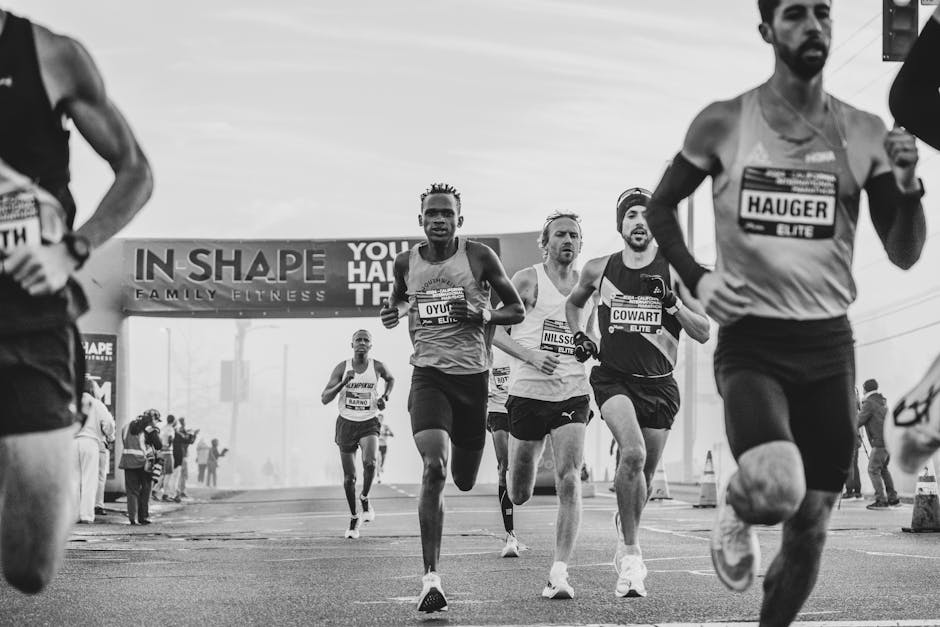

A 2024 NIH-backed review of endurance training research found that structured, progressive plans improve adherence and reduce the risk of overtraining compared with unstructured running. That matters because marathon success is rarely about motivation alone; it is usually about choosing a training system you can actually follow for 16 to 20 weeks.
Key Takeaways: The best marathon training app is not always the one with the most features. For most runners, the right choice comes down to coaching quality, workout customization, GPS reliability, battery efficiency, wearable support, and whether the app helps you stay consistent when weekly mileage rises.
Below is a research-based comparison of the best running apps for marathon training in 2026. This analysis focuses on training structure, pricing, device compatibility, and the practical features that matter when long runs, recovery days, and race-pace workouts start stacking up.

What makes a running app good for marathon training?
Marathon training places different demands on an app than casual 5K preparation. A strong platform needs to support periodization, recovery management, pacing guidance, and dependable GPS tracking over long distances.
Sources like Mayo Clinic and the NIH consistently emphasize gradual load progression, rest, and monitoring fatigue. That means the best app is not just a run logger; it should help runners manage weekly mileage, workout intensity, and race-specific sessions without turning every run into a maximal effort.
- Structured plans: Clear long-run progression, cutback weeks, taper, and race-pace workouts.
- Coaching logic: Adaptive scheduling or at least intelligent plan adjustments.
- GPS and pace tools: Reliable distance and split tracking for marathon-pace work.
- Wearable support: Smooth syncing with Garmin, Apple Watch, COROS, Polar, and Wear OS.
- Battery efficiency: Important for long runs and race-day use.
- Recovery metrics: Sleep, heart rate, and training load integration can improve decision-making.
7 best running apps for marathon training
The list below compares mainstream options with strong marathon relevance. Rankings reflect overall value for marathon preparation rather than casual running alone.
| App | Best For | Price | Offline/GPS Use | Notable Strength |
|---|---|---|---|---|
| Runna | Adaptive marathon plans | About $19.99/mo | Yes | Detailed plan building and pacing |
| Nike Run Club | Free guided coaching | Free | Yes | Excellent guided audio runs |
| Strava | Motivation and data ecosystem | About $11.99/mo | Yes | Community and route tools |
| TrainingPeaks | Coach-led marathon prep | Free / Premium about $19.95/mo | Sync-based | Deep planning and analytics |
| Garmin Connect | Garmin device owners | Free with device | Yes | Strong hardware integration |
| ASICS Runkeeper | Beginner-friendly plans | Free / Go about $9.99-mo | Yes | Simple interface and goal plans |
| MapMyRun | Route tracking and gear logging | Free / MVP about $5.99-mo | Yes | Useful route and shoe tracking |

1. Runna: best overall for structured marathon plans
Runna has become one of the most compelling marathon training apps because it centers the plan itself rather than just the run log. The platform builds race-specific schedules around target finish times, available training days, and current fitness level.
Its biggest advantage is clarity. The app breaks training into workouts with specific pace targets, warm-up instructions, interval structure, and progression logic that feels closer to a digital coach than a generic template.
Why it stands out
- Adaptive scheduling: Helpful when runners need to move sessions around a busy week.
- Marathon-specific workouts: Long runs with marathon-pace blocks, tempo sessions, and progression runs.
- Wearable support: Integrates with Apple Watch and Garmin workflows for easier execution.
Battery life depends mostly on the paired device rather than the app itself. On Apple Watch, typical GPS workout battery drain is materially higher than on dedicated sports watches, while Garmin devices often deliver 20 to 30+ hours of GPS depending on model and settings.
The trade-off is price. Runna is not the cheapest option, but for runners who want a highly structured experience without hiring a personal coach, it is one of the strongest picks.
2. Nike Run Club: best free app for guided marathon training
Nike Run Club remains one of the best free entries in this category. Its guided runs are especially valuable for newer marathoners who need pacing cues and motivation during long sessions.
Instead of overwhelming users with dense analytics, NRC focuses on execution and consistency. That design makes it appealing for runners who benefit from coaching language and simpler decision-making.
Strengths and limits
- Cost: Free, which gives it an unusually strong value proposition.
- Guided audio runs: Useful for easy runs, confidence-building long runs, and recovery pacing.
- Training plans: Solid for beginner to intermediate marathoners.
The limitation is customization depth. Compared with Runna or TrainingPeaks, Nike Run Club offers less granular control over plan design and fewer advanced analytics.
For runners who want low friction and no subscription, though, it remains one of the smartest marathon app choices available.

3. Strava: best for motivation, community, and route planning
Strava is not the strongest standalone marathon coaching app, but it is one of the most useful marathon training ecosystems. Its value comes from route discovery, social accountability, segment history, and broad device syncing.
Many runners effectively use Strava as the layer that keeps them engaged while another platform handles the formal plan. That is a meaningful distinction: motivation tools matter over four to five months of high-volume training.
| Feature | Strava | Nike Run Club | Runna |
|---|---|---|---|
| Structured marathon plans | Limited | Good | Excellent |
| Community features | Excellent | Moderate | Limited |
| Route planning | Excellent | Basic | Basic |
| Advanced pacing guidance | Moderate | Moderate | Excellent |
Wirecutter and PCMag have both highlighted Strava’s sticky community features and strong syncing ecosystem in past coverage. For runners prone to losing momentum mid-cycle, that community effect can be more valuable than another graph.
4. TrainingPeaks: best for coached athletes and advanced data
TrainingPeaks is the most analysis-heavy option on this list. It is widely used by endurance coaches because it handles training load, workout scheduling, plan delivery, and performance tracking at a deeper level than most consumer apps.
For self-coached marathoners, that can be either a strength or a downside. The platform is powerful, but it assumes the user either understands training concepts or is working with a coach who does.
Who should choose it
- Experienced runners who want to monitor fatigue and plan progression.
- Athletes with coaches who need centralized workout delivery and feedback.
- Data-focused users who value structured analysis over slick lifestyle design.
If a runner already owns a Garmin, COROS, or Polar watch and wants a coach-driven marathon block, TrainingPeaks is one of the most credible platforms available.

5. Garmin Connect: best if you already train with a Garmin watch
Garmin Connect is less flashy than some app-first competitors, but its hardware integration is excellent. For marathoners using watches such as the Forerunner 265, 965, or Fenix series, the platform provides a cohesive training environment with pace, heart rate, recovery, sleep, and GPS data in one place.
That matters because marathon training quality often depends on execution accuracy. Dedicated GPS watches generally outperform phones in battery efficiency and pacing consistency over long runs, especially in dense urban routes or during all-day training use.
| Device/App Pairing | Typical GPS Battery Life | Water Resistance | Accuracy Notes |
|---|---|---|---|
| Apple Watch + running app | About 6-12 hours workout GPS, model-dependent | Usually 5 ATM / WR50 | Convenient but shorter endurance |
| Garmin Forerunner-class watch + Connect | About 20-30+ hours GPS, model-dependent | Typically 5 ATM | Strong pace consistency and multi-band options on some models |
| COROS Pace-class watch + third-party sync | About 30-38+ hours GPS, model-dependent | Typically 5 ATM | Excellent battery value |
Garmin’s race widgets, recovery estimates, and guided workouts make it particularly useful for intermediate runners. The main drawback is that the best experience depends on already owning Garmin hardware.
6. Runkeeper and 7. MapMyRun: best budget-friendly alternatives
ASICS Runkeeper and MapMyRun are not the most advanced marathon training systems, but they still deserve consideration. Both provide route tracking, coaching features, and broad compatibility at a lower cost than premium coaching-first apps.
Runkeeper is the more beginner-friendly of the two. Its interface is approachable, and it works well for runners stepping up from shorter distances who want a gentler marathon plan experience.
MapMyRun is stronger on route logging and gear tracking. That shoe-mileage feature can help marathoners rotate trainers appropriately and retire worn pairs before injury risk increases.
Which one to pick?
- Choose Runkeeper if you want simpler coaching and cleaner onboarding.
- Choose MapMyRun if route tools and gear tracking matter more than coaching depth.

How to choose the right marathon app for your training style
The best app depends less on brand loyalty and more on training behavior. A runner who skips workouts because of decision fatigue needs different features than someone already working with a coach.
- Best overall coaching: Runna
- Best free choice: Nike Run Club
- Best for motivation and routes: Strava
- Best for coach collaboration: TrainingPeaks
- Best for Garmin owners: Garmin Connect
- Best budget alternatives: Runkeeper, MapMyRun
It is also worth thinking about hardware. If marathon training will be done mostly on a phone, GPS accuracy and battery life may become weak points on longer outings. If a runner already owns a modern sports watch with 5 ATM water resistance and 20+ hours of GPS, the app decision becomes easier because workout execution is less constrained.
Common mistakes runners still make with marathon apps
The biggest mistake is choosing an app based on hype rather than adherence. A complex platform with dozens of charts does not help if the plan is hard to follow or unrealistic for the user’s schedule.
The second mistake is trusting raw pace data without context. Mayo Clinic and sports medicine guidance consistently point back to recovery, injury prevention, and gradual progression. If an app encourages constant intensity without enough easy mileage or rest, it is not helping long-term marathon performance.
The third mistake is ignoring ecosystem fit. An excellent app can still be the wrong choice if it syncs poorly with the runner’s watch, drains battery too fast, or makes long-run execution annoying.
FAQ
Is a free marathon training app enough for most runners?
Often, yes. Nike Run Club in particular offers enough structure for many first-time marathoners. Paid apps become more valuable when runners want adaptive plans, deeper analytics, or coach-like progression.
Which running app has the best GPS accuracy?
GPS accuracy is usually driven more by the device than the app. Dedicated watches from Garmin and COROS generally provide more reliable long-run performance than phone-only tracking, especially in difficult signal environments.
Do marathon training apps reduce injury risk?
No app can guarantee that. However, structured progression, recovery reminders, and workload visibility may help runners avoid sudden mileage spikes, which sports medicine research often links to overuse problems.
Should beginners use heart rate or pace for marathon training?
Both can be useful. Pace is practical for goal-specific workouts, while heart rate adds effort context on hot days, hilly routes, or recovery runs. The best apps make room for both rather than forcing one metric.
For most runners in 2026, Runna is the best marathon training app if structured coaching is the priority, while Nike Run Club remains the best no-cost option. Strava, TrainingPeaks, and Garmin Connect each become more compelling depending on whether motivation, coaching, or hardware integration matters most.
Sources referenced in this analysis include Mayo Clinic training guidance, NIH-indexed endurance training research, and consumer testing/reporting from Wirecutter and PCMag.
This is informational content, not medical advice.