

A 2023 NIH review on wearable devices found that the biggest gap in health monitoring is not sensor availability, but long-term adherence: people stop wearing devices that are too intrusive, too needy, or too hard to charge. That is exactly why the Withings ScanWatch 2 vs Apple Watch decision is harder than it looks. One is built to disappear into daily life for weeks at a time, while the other offers a denser set of health alerts, app integrations, and near-real-time wellness data.
The problem for buyers is simple: both watches promise serious health insights, but they solve different health-monitoring frustrations. If you choose based only on brand familiarity, display quality, or ecosystem loyalty, you can easily end up with the wrong device for your actual health goals.
Key Takeaways: Apple Watch is the stronger option for users who want richer on-wrist health data, FDA-cleared ECG access, fall detection, and tighter iPhone-driven alerts. Withings ScanWatch 2 is the better fit for people who value long battery life, passive sleep and temperature tracking, and a less distracting hybrid design. The right choice depends less on raw features and more on how consistently you will wear it.
This article compares the two through a problem-solution lens: what health-monitoring problem are you trying to solve, and which watch fixes it more effectively?

Quick Verdict: Which Health Monitoring Problem Are You Solving?
If your main problem is missing important health signals in real time, Apple Watch is usually the stronger solution. Its ECG app, irregular rhythm notifications, high and low heart rate alerts, fall detection, and broader third-party health ecosystem make it more responsive and intervention-oriented.
If your main problem is staying consistent with daily health tracking, the Withings ScanWatch 2 often wins. Its hybrid design, roughly 30-day battery life, and lower-friction experience make it easier to wear day and night without constantly thinking about charging or screen distractions.
That means this is not just a smartwatch comparison. It is a comparison between high-feedback health monitoring and low-friction health monitoring.
Head-to-Head Spec Comparison
| Feature | Withings ScanWatch 2 | Apple Watch |
|---|---|---|
| Design | Hybrid analog + small OLED display | Full touchscreen smartwatch |
| Battery life | Up to 30 days | About 18 hours on standard models; up to 36 hours on Ultra 2 under typical use |
| ECG | Yes | Yes |
| Irregular rhythm notifications | Yes | Yes |
| SpO2 | Yes, spot checks and sleep-related metrics | Yes, blood oxygen support varies by region/model availability |
| Temperature tracking | 24/7 temperature variation tracking | Wrist temperature sensing during sleep |
| Sleep tracking | Automatic sleep, sleep stages, sleep quality metrics | Sleep stages, sleep schedule integration, respiratory insights |
| GPS | Connected GPS via phone | Built-in GPS on GPS/cellular models; dual-frequency GPS on Ultra 2 |
| Water resistance | 5 ATM | 50 m on standard models; 100 m WR rating for Ultra 2 |
| Fall detection | No dedicated advanced fall detection ecosystem like Apple | Yes |
| App ecosystem | Limited compared with Apple | Extensive Apple Health + third-party ecosystem |
| Phone compatibility | iPhone and Android | iPhone only |
Specs matter, but they matter differently depending on the health problem you are trying to fix. A person focused on overnight recovery and adherence may care more about battery life than on-wrist responsiveness. Someone monitoring heart rhythm concerns may prefer Apple’s stronger notification framework and emergency features.
This next part is where it gets interesting.

Pricing Comparison
| Pricing Category | Withings ScanWatch 2 | Apple Watch |
|---|---|---|
| Typical starting price | Around $349 | Apple Watch Series 10 starts around $399; SE lower; Ultra 2 much higher |
| Cellular option | No | Yes, on select models |
| Subscription required for core health features | No major mandatory subscription for core use | No mandatory subscription for core Apple health functions |
| Long-term charging cost/friction | Low due to 30-day battery | Higher due to near-daily charging on standard models |
Price alone does not tell the whole story. The hidden cost is behavioral: if frequent charging causes you to skip sleep tracking or recovery tracking, the more advanced watch can become the less useful health device.
Solution 1: Choose Apple Watch if You Need Actionable Cardio Alerts
What it is: Apple Watch is the better solution for users who want health monitoring that can escalate from passive data logging into visible, actionable alerts. Mayo Clinic and Apple-supported clinical documentation have emphasized the practical value of ECG screening, irregular rhythm notifications, and heart rate alerts when used appropriately.
Why it works: Apple Watch does not just collect data; it surfaces it aggressively. That matters if your problem is not “I need more health data,” but “I need to notice issues when they happen.”
How to implement it:
- Use Apple Health to enable ECG, irregular rhythm notifications, and high/low heart rate alerts.
- Pair it with sleep schedules and medication reminders if you want broader wellness compliance.
- Review trends weekly rather than reacting to every isolated datapoint.
This is where Apple Watch clearly outperforms ScanWatch 2 for health monitoring depth. Wirecutter and PCMag have both consistently ranked Apple Watch highly for health feature breadth because it combines sensing with software follow-through.
Best for: users with iPhones who want richer cardiovascular monitoring, safety features, and health alerts that are easier to act on quickly.

Solution 2: Choose ScanWatch 2 if Your Problem Is Inconsistent Wear Time
What it is: Withings ScanWatch 2 is built for people who abandon wearables because they feel too digital, too distracting, or too annoying to recharge. Its analog-style design with a small embedded display changes the experience from “mini phone on your wrist” to “watch that quietly tracks health.”
Why it works: Adherence is a health feature. NIH research on wearables repeatedly shows that the most accurate device on paper loses practical value if users remove it overnight, leave it on a charger, or stop wearing it after a few weeks.
How to implement it:
- Wear it continuously for sleep, recovery, and resting heart rate baselines.
- Use the Health Mate app to review weekly trends instead of minute-by-minute readings.
- Treat it as a passive monitoring tool, not a productivity dashboard.
For health monitoring features tied to long-term consistency, ScanWatch 2 solves a real problem Apple Watch often does not: people actually keep it on. The 30-day battery is the headline spec, but the deeper advantage is reduced friction.
Best for: users who want sleep, heart rate, SpO2, and temperature tracking without a screen-heavy smartwatch lifestyle.
Solution 3: Pick Based on Sleep and Recovery Priorities, Not Just ECG
What it is: Buyers often overfocus on ECG and underweight sleep and recovery tracking. For many people, the more common health-monitoring need is not detecting a rare rhythm event, but understanding whether sleep debt, stress, temperature variation, and lower recovery are degrading daily performance.
Why it works: ScanWatch 2 has an edge in overnight practicality because its battery and lighter interaction model encourage 24/7 wear. Apple Watch, meanwhile, provides more detailed ecosystem integration for sleep schedules, trends, and wellness apps, but only if users maintain charging discipline.
How to implement it:
- If you prioritize nightly wear and passive recovery tracking, lean toward Withings.
- If you want deeper integration with Apple Health, sleep focus modes, and broader app-based interpretation, lean toward Apple Watch.
- Check whether your actual pain point is missing sleep data or lacking health-context software.
Neither device is a medical-grade sleep lab. Consumer wearables estimate stages and trends, and their strongest value is directional insight over time rather than perfect nightly precision.
This next part is where it gets interesting.
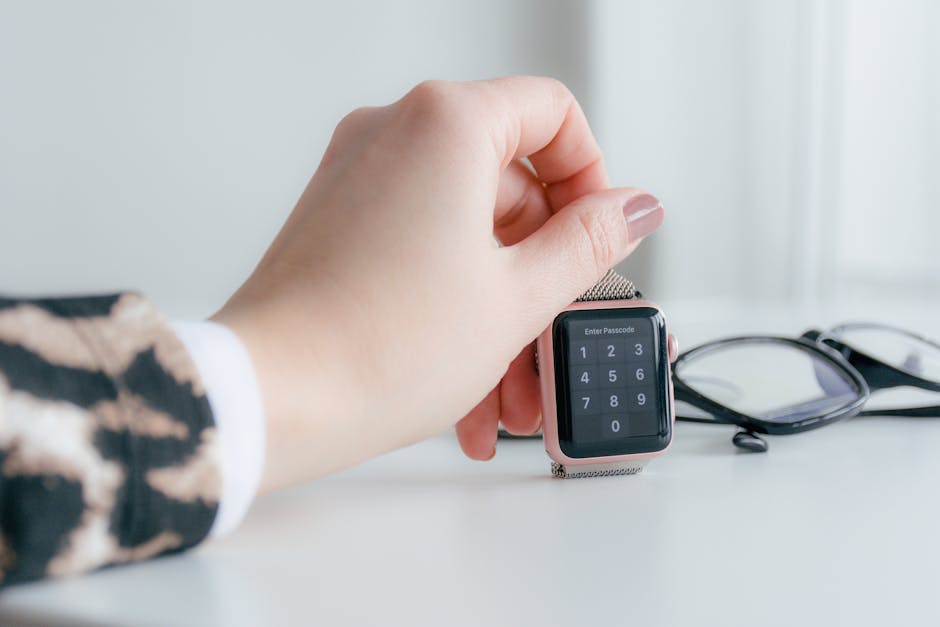
Solution 4: Do Not Ignore Safety Features and Ecosystem Fit
What it is: A health watch is not only about metrics. It is also about what happens when something goes wrong. Apple Watch pulls ahead for users who care about fall detection, emergency calling pathways, location sharing, and broader accessibility features.
Why it works: Apple has spent years turning its watch into a health-and-safety platform, not just a sensor package. PCMag and Wirecutter frequently highlight this point: the value is the combination of hardware, software, alerts, and ecosystem continuity.
How to implement it:
- Choose Apple Watch if you are buying for an older family member, someone active outdoors, or anyone who benefits from emergency features.
- Choose ScanWatch 2 if cross-platform support matters or if the person dislikes smartwatch complexity.
- Think about the phone they already use. Apple Watch is iPhone-only, while Withings works with iPhone and Android.
This is the hidden decision many buyers miss. The more advanced health ecosystem is not automatically the better one if it creates usability resistance.
Pros and Cons for Each Device
Withings ScanWatch 2 Pros
- Excellent battery life at up to 30 days
- Hybrid design looks more like a traditional watch
- Strong passive health tracking for sleep, heart rate, and temperature variation
- Works with both iPhone and Android
- Less distracting for users who dislike constant notifications
Withings ScanWatch 2 Cons
- Smaller display limits glanceable detail
- Connected GPS is less convenient than built-in GPS
- App ecosystem is much narrower than Apple’s
- Weaker safety and emergency feature stack
Apple Watch Pros
- Broader health and safety feature set
- Strong ECG, heart rate alerts, and fall detection support
- Deep Apple Health integration
- Built-in GPS on many models and strong workout tracking
- Best-in-class app ecosystem for iPhone users
Apple Watch Cons
- Short battery life on standard models
- Daily or near-daily charging can disrupt sleep tracking
- iPhone-only
- Can feel more distracting than a health-first hybrid wearable

Which One Should You Pick?
Pick Withings ScanWatch 2 if: you want long-term passive health monitoring, better battery life, a classic watch design, and less digital noise. It is the more effective solution for users whose biggest barrier is consistency.
Pick Apple Watch if: you want richer health alerts, stronger workout tracking, better safety features, and tighter app-driven interpretation. It is the more effective solution for users who want immediate, actionable health feedback.
The simplest rule: choose ScanWatch 2 for health tracking you will forget is there; choose Apple Watch for health tracking that actively talks back.
Quick-Reference Summary Table
| Need | Better Choice | Why |
|---|---|---|
| Longest battery life | Withings ScanWatch 2 | Up to 30 days reduces charging friction |
| Most comprehensive health alerts | Apple Watch | ECG, rhythm alerts, fall detection, broader ecosystem |
| Best overnight wear consistency | Withings ScanWatch 2 | Low-maintenance design supports continuous wear |
| Best for iPhone health ecosystem | Apple Watch | Apple Health and third-party integration are stronger |
| Cross-platform compatibility | Withings ScanWatch 2 | Works with Android and iPhone |
| Best emergency and safety support | Apple Watch | Fall detection and emergency features are more robust |
You May Also Like
- Garmin Forerunner 265 vs Apple Watch Series 10: Marathon Training Insights (2024)
- MacroFactor vs Carbon Diet Coach: Recomp (2026)
- Apple Fitness+ vs Peloton Yoga: Beginner Ease (2026)
FAQ
Is Withings ScanWatch 2 more accurate than Apple Watch for health monitoring?
Not across the board. Apple Watch is generally stronger for active alerts and integrated health workflows, while ScanWatch 2 often wins on adherence because people are more likely to wear it continuously.
Which is better for sleep tracking: ScanWatch 2 or Apple Watch?
ScanWatch 2 has a practical advantage because of battery life and low-friction overnight wear. Apple Watch can provide strong sleep insights too, but charging habits matter much more.
Can either watch replace medical monitoring equipment?
No. Consumer wearables can help identify trends and prompt conversations with clinicians, but they are not substitutes for professional diagnosis or medical-grade monitoring.
Is Apple Watch worth the extra cost for health features?
Usually yes, if you will use its alerts, safety functions, ECG tools, and Apple Health ecosystem. If you mainly want passive long-term tracking, ScanWatch 2 may offer better value.
Disclaimer: This is informational content, not medical advice.
Sources referenced: Mayo Clinic guidance on heart rhythm awareness and consumer ECG tools; NIH reviews on wearable adherence and digital health monitoring; Wirecutter and PCMag product analyses for smartwatch feature comparisons and pricing context.
📌 You May Also Like
🔍 Explore More Topics