

More than 1 billion activities were uploaded to Strava in 2023 alone, while Garmin continues to expand one of the largest device-linked fitness ecosystems in the market. That scale matters because community features are no longer a nice extra for runners and cyclists; they increasingly shape motivation, accountability, route discovery, and long-term adherence. Research from the NIH and Mayo Clinic consistently links social support and self-monitoring with stronger exercise consistency, which helps explain why platform choice can influence training outcomes beyond raw tracking specs.
Key Takeaways: Strava is stronger for public-facing motivation, local competition, and social discovery. Garmin Connect is stronger for structured training context, device integration, and data-rich private communities. For cyclists and runners who want visibility and segment culture, Strava leads. For athletes who prioritize training metrics first and social features second, Garmin Connect is often the more practical home base.
For this comparison, the focus is narrow: community features for cycling and running. That means less attention on smartwatch hardware and more attention on how each platform helps people compare efforts, interact with other athletes, join challenges, and stay engaged. The key question is not simply which app logs workouts better. It is which ecosystem creates more useful community momentum for your training style.
Quick Verdict
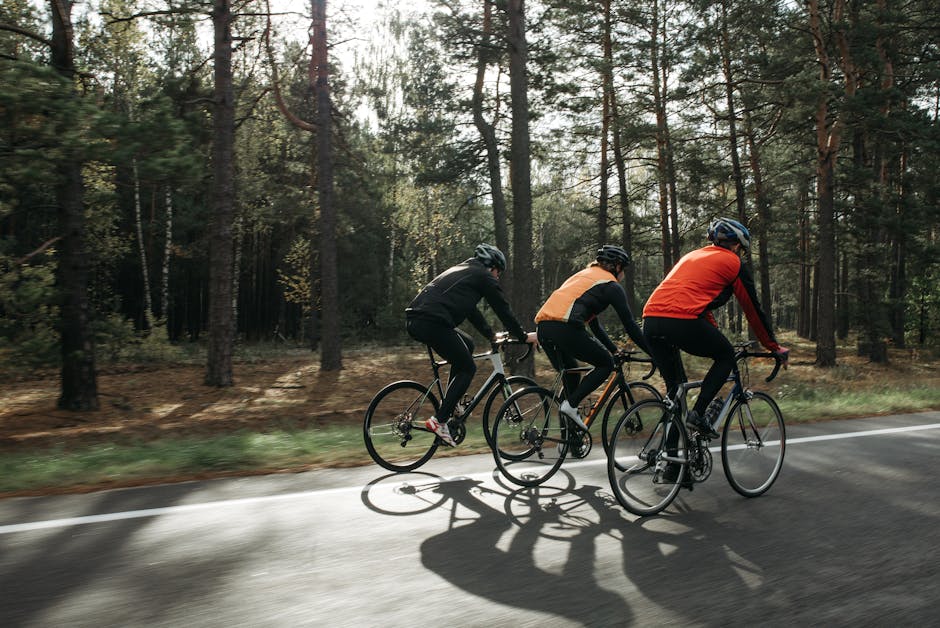
If community is your top priority, Strava has the clearer edge. Its segments, public activity feed, club culture, local leaderboards, and stronger network effects make it the more socially active platform for runners and cyclists. In practical terms, Strava feels built around visibility and interaction.
Garmin Connect, by contrast, is more of a training hub with community layers added on top. It offers group functions, badges, challenges, and social sharing, but its strength comes from its connection to Garmin watches, bike computers, heart rate sensors, and training plans. That gives it better context for performance analysis, yet its community layer is typically less dynamic than Strava’s.
| Quick Comparison | Strava | Garmin Connect |
|---|---|---|
| Best for | Social motivation, segments, clubs | Device-driven training ecosystem |
| Community activity level | Very high | Moderate |
| Public leaderboards | Core feature | More limited |
| Training data depth | Strong, especially paid tier | Very strong with Garmin devices |
| Route discovery via community | Excellent | Good |
| Best fit | Runners and cyclists who want competition and visibility | Athletes already invested in Garmin hardware |

Spec Comparison: Community Features Head to Head
Community tools can look similar on a feature checklist, but their impact depends on depth and usage. A platform with clubs, comments, and challenges is only as useful as the people actively using them. This is where market momentum matters.
Strava’s public footprint remains unusually strong because it functions almost like a niche social network for endurance sports. Reports from Statista on connected fitness usage and recurring analysis from outlets such as PCMag and Wirecutter show that Strava is frequently treated as a social layer even by athletes using devices from Apple, Garmin, COROS, Suunto, and Polar. Garmin Connect, meanwhile, benefits from tight integration but relies more heavily on Garmin’s installed device base.
| Feature | Strava | Garmin Connect |
|---|---|---|
| Core community model | Public social network for endurance sports | Companion ecosystem tied to Garmin accounts and devices |
| Activity feed | Highly social, comment and kudos driven | Available, but typically lower engagement |
| Clubs/groups | Robust clubs with rankings and visibility | Groups and connections, less culturally central |
| Leaderboards | Segments with local and historic competition | Challenges and rankings, but less segment-centered |
| Route/community discovery | Strong via heatmaps, routes, athlete activity | Good via Garmin courses and ecosystem tools |
| Challenge participation | Very active branded and community challenges | Active badge and event challenges |
| Coaching/training plans | Available, more add-on oriented | Strong native integration with Garmin Coach and device metrics |
| Privacy controls | Improved, but public culture remains strong | Generally easier for private, device-centered use |
| Cycling segment culture | Excellent | Limited relative to Strava |
| Running social discovery | Excellent | Moderate |

Pricing Comparison
Neither platform should be judged only by sticker price, because community value often depends on whether the free tier is enough for the way you train. Still, cost changes the recommendation.
| Pricing Factor | Strava | Garmin Connect |
|---|---|---|
| Base app cost | Free tier available | Free with Garmin account |
| Premium tier | Strava Subscription required for full segment analytics, advanced training features, route tools | No separate premium fee for core Connect features |
| Hardware dependency | Works with many brands and phones | Best value usually requires Garmin hardware |
| Typical user cost path | Lower hardware barrier, recurring software cost possible | Higher hardware entry, lower software upsell pressure |
That pricing structure changes user behavior. Strava attracts a wider mixed-device population because it can sit on top of almost any setup. Garmin Connect is effectively subsidized by hardware, which can make it feel like a better value if you already own a Forerunner, Fenix, Edge, Venu, or Instinct device.

What the Data Suggests About Community Engagement
The most important distinction is network effect density. Strava’s value rises as more local runners and cyclists use it publicly. Segment competition, route comparison, and social proof all get stronger when nearby athletes are posting often. Reddit threads across running and cycling communities frequently describe Strava as the default place to be seen, while Garmin Connect is often described as the place where the “real data” lives.
That divide aligns with broader behavior research. NIH-backed findings on physical activity adherence repeatedly show that feedback loops and social reinforcement improve consistency. Strava’s design leans hard into both. Kudos, comments, challenge completion, local legends, and segment leaderboards create frequent micro-rewards. Garmin Connect offers badges and social notifications too, but they generally feel secondary to the training dashboard.
There is also a discoverability gap. Strava makes it easier to find what other athletes are doing in your area: favorite routes, segment hotspots, group rides, race efforts, and climb attempts. For cyclists especially, that matters because route quality and local competition often influence which app becomes the social default. Garmin Connect can support those experiences, but it rarely produces the same public energy.
Why cyclists often lean Strava
- Segment culture remains central to cycling motivation.
- Route benchmarking is easier when many riders post publicly.
- Club and challenge visibility tends to be stronger.
- Cross-device adoption means more friends are already there.
Why runners split more evenly
- Garmin Coach and device-linked metrics appeal to structured runners.
- Strava still wins for social visibility and local competition.
- Privacy preferences matter more in running, where some users avoid public route sharing.
- Beginner runners may find Garmin Connect sufficient if their main goal is guided training rather than social discovery.
Community Analysis by Use Case
Not every athlete wants the same kind of community. Some want applause. Some want accountability. Others want route intelligence or race-day comparison. When those goals are separated, the strengths become clearer.
1. For motivation and habit building
Strava wins. Mayo Clinic guidance on exercise adherence emphasizes accountability and social support as meaningful drivers of consistency. Strava operationalizes that in a very direct way. Public uploads, streak-oriented culture, kudos, and club challenges can make ordinary training feel visible and consequential.
Garmin Connect can still support habit formation through badges, weekly summaries, and training targets, but it tends to reward the user with data rather than social momentum. For some people that is ideal. For many others, it is less sticky.
2. For structured training communities
Garmin Connect has the edge. If the community you want is a smaller circle tied to actual training plans, readiness metrics, heart rate zones, and race prep, Garmin Connect often feels more coherent. Device-native features such as training status, VO2 max estimates, recovery time, and Garmin Coach plans create a more integrated coaching environment.
This does not mean Garmin Connect has better social features overall. It means its social layer fits athletes who care more about comparing process than collecting public engagement.
3. For local competition
Strava dominates. Segments are still one of the most powerful community mechanics in endurance tech. They turn familiar roads and trails into repeatable competitions. That works especially well in cycling, where specific climbs, descents, and sprint sections become community landmarks.
Garmin Connect does not match that cultural footprint. If local leaderboards and route bragging rights matter, Strava is simply more relevant.
4. For privacy-conscious athletes
Garmin Connect is often the safer-feeling choice by default. Strava has improved privacy controls significantly over time, especially after public scrutiny around location exposure. Still, its core culture remains more public and socially outward-facing. Garmin Connect feels more comfortable for users who want their training ecosystem to stay closer to the device and selected contacts.
That said, privacy is manageable on both platforms if settings are configured carefully.
Pros and Cons for Each Platform
Strava Pros
- Best-in-class social network effect for runners and cyclists.
- Segments and leaderboards create ongoing local competition.
- Cross-platform support works with many devices and apps.
- Community route discovery is stronger than most rivals.
- Challenge culture keeps motivation high.
Strava Cons
- Many advanced features sit behind a subscription.
- Public-by-culture environment can feel noisy or performative.
- Data depth may still depend on external devices and integrations.
- Privacy management requires attention from new users.
Garmin Connect Pros
- Excellent training context when paired with Garmin devices.
- No major separate premium paywall for core platform features.
- Strong ecosystem integration across watches, bike computers, sensors, and plans.
- Good private training environment for data-focused users.
- Useful badges and challenges without forcing constant public posting.
Garmin Connect Cons
- Community layer feels less active than Strava’s.
- Lower social visibility for clubs, comparisons, and route culture.
- Best experience depends on Garmin hardware.
- Less compelling for athletes whose friends use mixed devices.
Device and Ecosystem Context Still Matter
Community features do not exist in a vacuum. They sit on top of hardware and app ecosystems, and that affects perceived value. Garmin’s advantage is not just software design. It also benefits from mature hardware breadth: many current Garmin watches offer battery life from roughly 10 days to several weeks depending on model, while Edge cycling computers support deep sensor pairing and route navigation. Water resistance on many popular Garmin wearables is typically 5 ATM, and multi-band GPS on higher-end models improves route precision in dense urban or trail environments.
Strava, meanwhile, is intentionally hardware-agnostic. That makes it more flexible for athletes using an Apple Watch, Samsung Galaxy Watch, COROS Pace, Polar Pacer, Wahoo bike computer, or a phone with GPS. In other words, Strava’s community strength partly comes from not forcing one brand decision up front.
| Ecosystem Factor | Why It Helps Strava | Why It Helps Garmin Connect |
|---|---|---|
| Device compatibility | Broad support across brands expands social graph | Tight Garmin-only optimization improves data consistency |
| GPS context | Good enough for sharing and segment participation across many devices | Often better on premium Garmin hardware, especially multi-band models |
| Battery implications | Depends on connected device | Long battery life on Garmin devices supports long rides and races |
| Water resistance context | Varies by device brand | Commonly 5 ATM on many Garmin watches, useful for multisport users |
For cyclists, the bike computer question also matters. Garmin Edge users often stay in Garmin Connect because the ecosystem is efficient. But many still export to Strava because that is where the social layer feels alive. That dual-platform behavior says a lot: Garmin Connect stores the training record, while Strava often hosts the community conversation.
Which One Should You Pick?
Pick Strava if you care most about social accountability, local segments, discovering popular running and cycling routes, joining visible challenges, and comparing efforts with a broad mixed-device community. It is the stronger choice for athletes who want training to feel connected to a larger culture.
Pick Garmin Connect if you already use Garmin hardware, prefer a more data-centered environment, want integrated coaching and readiness insights, and do not need your training life to be highly public. It is especially strong for runners following structured plans and cyclists already deep in the Garmin ecosystem.
Use both if you want the best practical setup. Many athletes do. Garmin Connect can serve as the primary data and device hub, while Strava becomes the outward-facing community layer. That approach is common because it reflects how the two platforms are actually used in the market rather than how they are marketed.
From a purely community-first perspective, the conclusion is straightforward: Strava remains the better platform for cycling and running community features. From a full training-system perspective, Garmin Connect can still be the smarter anchor if your device ecosystem and coaching needs come first.
You May Also Like
- How Garmin Body Battery Solves Daily Energy Dips
- Does Shoe Support Help Flat-Footed Runners?
- Does Garmin Sync Actually Adjust MyFitnessPal Calories?
FAQ
Is Strava better than Garmin Connect for cyclists?
For community features, usually yes. Strava’s segment leaderboards, club activity, and route-sharing culture are more developed and more active for cyclists.
Is Garmin Connect enough without Strava?
Yes, especially if you use Garmin devices and care more about training metrics than public interaction. But you may miss the larger social network and segment competition that many runners and cyclists value.
Which app is better for beginner runners?
It depends on the goal. Strava is better for social motivation and discovering a community. Garmin Connect is better if you want guided plans and deeper device-linked training context.
Can you use Garmin Connect and Strava together?
Yes. Many athletes sync workouts from Garmin devices to Strava automatically. That combination is popular because it pairs Garmin’s training data depth with Strava’s stronger social layer.
Sources referenced: Mayo Clinic guidance on exercise adherence and support systems; NIH research on physical activity behavior and self-monitoring; Statista trend data on connected fitness and app usage; product analysis and benchmarking from Wirecutter and PCMag; aggregated user sentiment patterns from Reddit running and cycling communities; app marketplace review patterns from G2 and Capterra where relevant for software experience framing.
This is informational content, not medical advice.
📌 You May Also Like
🔍 Explore More Topics