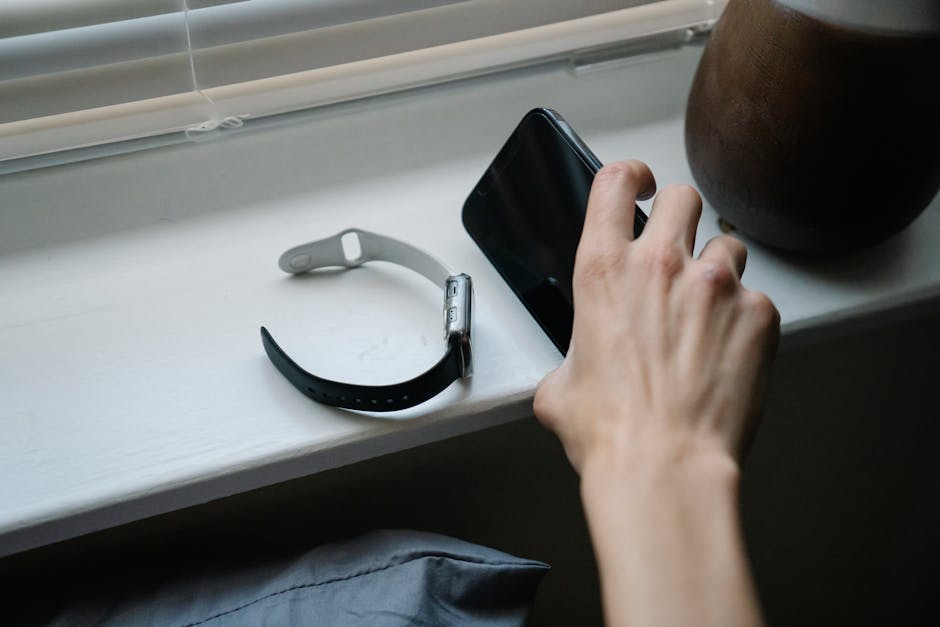

More than 39 million U.S. adults are estimated to have sleep apnea, yet most cases remain undiagnosed (don’t skip this), according to data widely cited by the NIH and sleep research groups. That statistic matters because wearables are no longer just counting steps; they are increasingly positioned as early-warning tools for heart rhythm changes, sleep disruption, temperature trends, and recovery signals.
In this comparison, the real question is not which watch does more. It is which watch handles health monitoring better for the kind of user who actually plans to wear it day and night.
Key Takeaways: Apple Watch offers the broader health toolkit, stronger workout intelligence, and deeper real-time alerts. Withings ScanWatch 2 counters with far longer battery life, a more discreet hybrid design, and a health-first experience that is easier to live with 24/7. If your priority is maximum health feature depth, Apple Watch leads. If your priority is consistent long-term wear and low-maintenance tracking, ScanWatch 2 makes a serious case.

Quick Verdict
I get asked about this all the time.
For pure feature breadth, Apple Watch is the stronger health-monitoring platform. It combines ECG, irregular rhythm alerts, high and low heart rate notifications, sleep tracking, wrist temperature sensing, medication support through Apple Health, and newer sleep apnea notification features on supported models and regions.
Withings ScanWatch 2 is narrower but more focused. It emphasizes passive health tracking, ECG, SpO2, heart rate, overnight HRV, temperature variation tracking, sleep analysis, and a hybrid watch design that can realistically stay on your wrist for weeks instead of hours.
That distinction matters. Mayo Clinic and other clinical sources repeatedly note that trend data is often more useful than a single reading. A watch you wear continuously for nearly a month may capture more consistent trends than a watch that needs frequent charging, even if the second device has more sensors.

Spec Comparison: Health Monitoring Head to Head
| Feature | Withings ScanWatch 2 | Apple Watch |
|---|---|---|
| Heart rate tracking | 24/7 optical HR tracking | Continuous optical HR tracking with richer live workout data |
| ECG | Yes, on-device ECG via Withings ECG app | Yes, single-lead ECG app on supported models |
| Irregular rhythm alerts | Heart rate notifications; ECG-focused rhythm checks | Irregular rhythm notifications plus high/low heart rate alerts |
| Blood oxygen | Yes, SpO2 spot and sleep-related monitoring | Varies by model and market; feature availability has changed in some regions |
| Sleep tracking | Sleep stages, interruptions, breathing quality, REM, smart wake-up | Sleep stages, respiratory rate, schedule integration, sleep apnea notifications on supported models |
| Temperature tracking | 24/7 temperature tracking and overnight variation trends | Wrist temperature sensing, primarily overnight trend analysis |
| HRV / recovery | Overnight HRV and recovery-oriented wellness insights | HRV available in Apple Health, plus Vitals-style overnight context on newer software |
| GPS accuracy | Connected GPS; route quality depends on paired phone | Built-in GPS/GNSS; generally stronger for runners and outdoor training |
| Water resistance | 5 ATM | WR50 on standard models; swimproof |
| Battery life | Up to 35 days | About 18 hours standard, up to 36 hours in Low Power Mode on current mainstream models |
| Phone compatibility | iPhone and Android | iPhone only |
The biggest takeaway from the table is simple: Apple Watch wins on real-time intelligence and ecosystem depth, while ScanWatch 2 wins on wearability and battery efficiency.
That tradeoff mirrors what review outlets such as PCMag and Wirecutter often highlight across the category. Smartwatches usually do more, but they also ask more from the user in charging, notifications, and app management.
This is the part most guides skip over.

You May Also Like
- How Garmin Body Battery Solves Daily Energy Dips
- Does Fitbit Sleep Profile Explain Your Sleep Animal?
- How Apple Watch ECG Solves AFib Alerts for Adults
Pricing Comparison
| Pricing Category | Withings ScanWatch 2 | Apple Watch |
|---|---|---|
| Starting price | About $369.95 | About $399 for GPS models on current flagship lineup |
| Cellular option | No | Yes, higher-priced cellular variants available |
| Subscription pressure | Core tracking works without mandatory subscription, though Withings+ adds extras | Core health features do not require a paid subscription |
| Long-term ownership cost | Potentially lower due to fewer accessory and charging needs | Potentially higher if you add cellular service, premium bands, or deeper ecosystem purchases |
Price is closer than many buyers expect. The true cost difference often shows up later: Apple Watch may pull you deeper into a premium ecosystem, while ScanWatch 2 stays comparatively simple.

Where Apple Watch Pulls Ahead for Health Monitoring
Apple Watch is the more ambitious health computer. It is built not just to log metrics, but to actively surface patterns, changes, and alerts in near real time.
1. Better real-time cardiovascular notifications
Apple’s heart health stack is broader for mainstream users. Beyond ECG, it offers high and low heart rate notifications and irregular rhythm alerts that are tightly integrated into the watch and Health app workflow.
That matters because cardiovascular monitoring is not just about generating a PDF-style ECG. It is about noticing something unusual quickly enough to follow up appropriately.
2. More advanced sleep ecosystem
Sleep tracking on Apple Watch has become more clinically interesting as Apple added respiratory context and sleep apnea notifications on supported devices. For users concerned about overnight breathing disruption, this gives Apple a clear edge in screening-oriented features.
Research cited by Wirecutter and sleep specialists suggests consumer wearables are reasonably good at estimating total sleep time, but less dependable for detailed sleep stage precision. Apple still benefits by combining those imperfect estimates with broader overnight context.
3. Stronger exercise-linked health data
Apple Watch is better for users who want health and fitness to inform each other. Built-in GPS is a major advantage over connected GPS, especially for runners, walkers, and cyclists who do not always want to carry a phone.
More reliable route capture and richer workout metrics improve the value of heart-rate, recovery, and cardio trend analysis. Health monitoring is simply more useful when exercise data is strong.
4. Better ecosystem integration
Apple Health remains one of the strongest consumer health data hubs. If you already use iPhone, medication reminders, sleep schedules, or third-party wellness apps, Apple Watch fits into a larger monitoring environment with less friction.
- Apple Watch Pros
- Broader health feature set
- Better workout and GPS capability
- Stronger real-time alerts and notifications
- Excellent iPhone ecosystem integration
- More useful for users who want smartwatch and health features in one device
- Apple Watch Cons
- Short battery life relative to health-first rivals
- iPhone-only compatibility
- More distracting for users who want low-noise tracking
- Some health features vary by model and region

Where Withings ScanWatch 2 Has the Smarter Health Design
Withings takes the opposite approach. Instead of turning the wrist into a mini smartphone, it builds a hybrid watch whose biggest strength is that many people are more likely to wear it continuously.
1. Battery life changes the monitoring equation
Up to 35 days of battery life is not just a convenience bullet point. It is one of the strongest health-monitoring advantages in the category because it reduces missed nights, forgotten charges, and breaks in trend data.
For sleep tracking, recovery, resting heart rate, temperature trends, and overnight HRV, consistency matters. A device that stays charged through travel, workweeks, and weekends has a measurable practical edge.
2. A less intrusive form factor
ScanWatch 2 looks like a traditional analog watch first and a health wearable second. That makes it appealing for users who want clinical-style signals without the social and cognitive noise of a full smartwatch.
Many buyers abandon wearables not because the sensors are weak, but because the device becomes annoying. Withings understands that friction is a health-tracking problem too.
3. Strong passive health signals
ScanWatch 2 includes ECG, SpO2, overnight HRV, sleep stage tracking, breathing quality indicators, and temperature variation monitoring. Those are meaningful features for users who care more about long-term wellness patterns than about smartwatch apps.
Its newer focus on temperature variation and recovery-oriented metrics is especially relevant for users tracking fatigue, sleep quality, menstrual cycle signals, or shifts in general wellness status.
- Withings ScanWatch 2 Pros
- Excellent battery life for continuous health tracking
- Hybrid design is more discreet and easier to wear daily
- Works with both iPhone and Android
- Strong passive health monitoring stack
- Useful for users who prioritize sleep, recovery, and trend data
- Withings ScanWatch 2 Cons
- No full smartwatch app ecosystem
- Connected GPS is weaker than built-in GPS
- Smaller display limits data visibility on the wrist
- Health insights are solid, but not as deeply interactive as Apple’s
Accuracy, Limitations, and What the Research Actually Supports
This is where the marketing needs a reality check. NIH-linked research and expert commentary from outlets like Wirecutter consistently show that wrist wearables can be useful for trends, but they are not perfect diagnostic tools.
Heart rate tracking is usually strongest during steady-state activity and rest, but less reliable during interval training, poor fit, skin motion, or cold-weather conditions. Sleep duration estimates are often directionally useful, while sleep stage breakdowns are more variable.
ECG features are valuable because they can prompt earlier follow-up, but they do not replace a formal medical workup. Likewise, blood oxygen and temperature trend features are best understood as context tools, not stand-alone conclusions.
That framing slightly favors Apple Watch for acute alerts and slightly favors ScanWatch 2 for long-term adherence. In other words, Apple may catch more types of signals, while Withings may capture more nights of actual data.
Which One Should You Pick?
Pick Apple Watch if you want the broadest health toolkit, stronger workout data, better live alerts, and a watch that doubles as your everyday smart device. It is the better fit for iPhone users who want one wearable for health, fitness, communication, and ecosystem integration.
Pick Withings ScanWatch 2 if you want health monitoring that fades into the background. It is the better choice for users who care most about sleep, recovery, heart checks, temperature trends, and continuous wear without nightly charging.
Pick based on use case, not hype:
- If you are a runner or active exerciser who values GPS precision and richer training metrics, Apple Watch is the safer buy.
- If you want a watch that looks formal, works with Android, and can collect health trends for weeks at a time, ScanWatch 2 is more compelling.
- If health monitoring is your main reason to buy, battery life should matter almost as much as sensors.
For most buyers focused specifically on health monitoring features, Apple Watch is the more capable platform. But for a sizable group of users, ScanWatch 2 may be the more realistic long-term health companion because it asks less from them every day.
This is informational content, not medical advice.
FAQ
Is Withings ScanWatch 2 more accurate than Apple Watch for health tracking?
Not overall. Apple Watch generally offers more advanced health and workout data, while ScanWatch 2 is stronger in battery-powered consistency. Accuracy depends on the metric: Apple tends to be better for exercise-linked tracking, while Withings can be more practical for uninterrupted long-term wear.
Can Withings ScanWatch 2 replace Apple Watch for heart monitoring?
It can cover the basics for many users, including heart rate, ECG, and blood oxygen-related tracking. However, Apple Watch offers a broader alert system and more interactive health workflows, so it remains the stronger option for users who want more active monitoring.
Is Apple Watch better for sleep apnea and sleep tracking?
For users on supported models and regions, Apple Watch has the edge because of sleep apnea notification features and stronger integration with overnight health metrics. ScanWatch 2 still performs well for sleep duration, interruptions, breathing quality, and long-term sleep trend tracking.
Which watch is better for Android users focused on health?
Withings ScanWatch 2 is the obvious choice because Apple Watch requires an iPhone. It also remains one of the more polished hybrid options for users who want health data without committing to a full smartwatch experience.
Sources referenced: official Apple and Withings product materials; Apple health feature announcements; Mayo Clinic guidance on heart-rate tracking context; NIH-linked wearable research; category analysis from Wirecutter and PCMag.
📌 You May Also Like